Residential & Structural
Termite Management
Termites are quiet. Most homeowners only find out when a door frame sounds hollow or a cupboard starts to crumble, and by then the colony has usually been feeding for months. In this part of the country, where the soil stays warm and the monsoon brings plenty of moisture, subterranean termites are the most common problem we see in both new and older buildings.
Discovering termites in your home can be a homeowner's worst nightmare, but with our comprehensive termite management pest control services, you can rest easy knowing your property is protected. Our expert team employs a multifaceted approach to termite control, including preventive measures, state-of-the-art chemical barriers, advanced baiting systems, and meticulous monitoring and inspection. Don't let termites compromise the integrity of your home. Trust our professional pest control services to safeguard your investment and provide peace of mind for years to come.
What's included
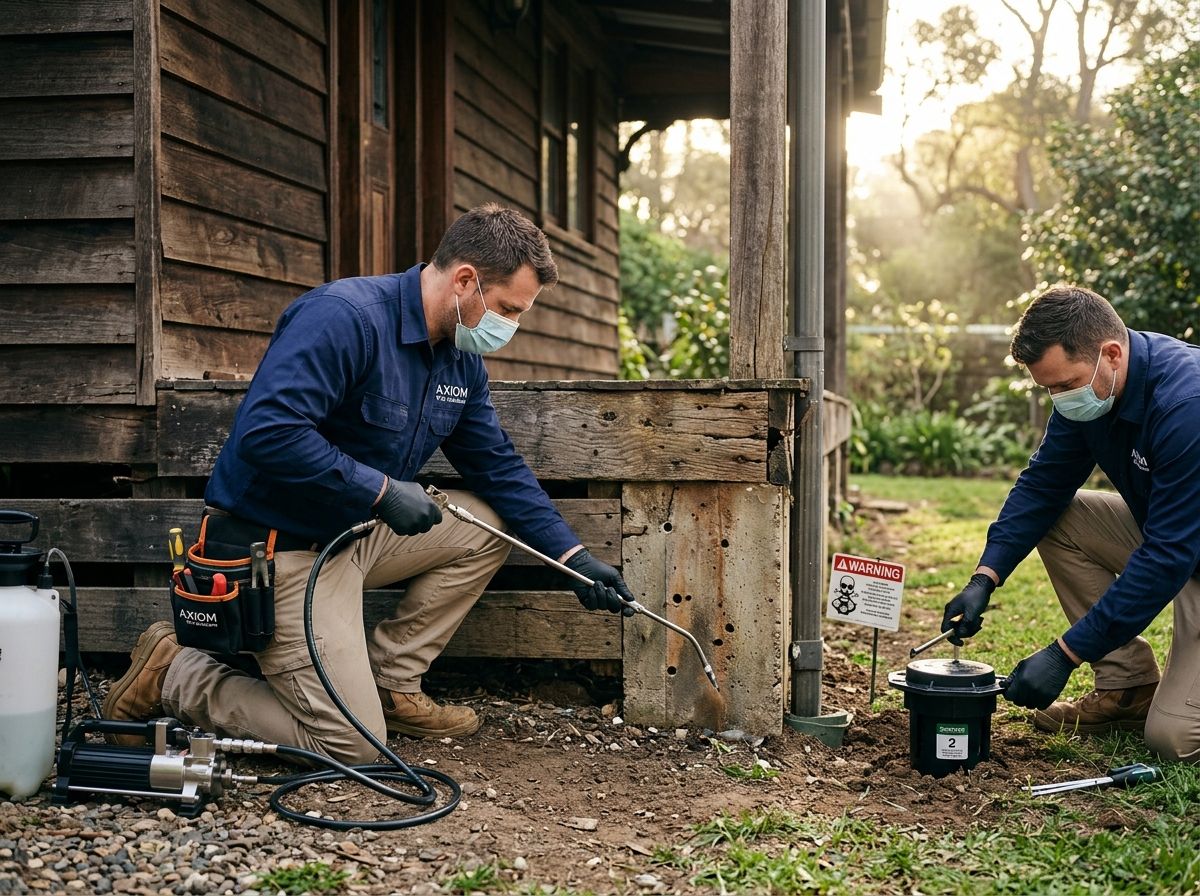
- Advanced chemical barrier creation
- Drill-fill-seal precision injection
- Woodwork & foundation protection
- Up to 5-Year service warranty
Signs to look out for
- Thin mud tubes running up walls, along skirting or behind electrical boards
- Wood that sounds hollow when you tap it, especially door and window frames
- Small piles of discarded wings near windows or lights after the first rains
- Paint that bubbles or peels in lines, as if something is moving underneath
- Doors and windows that suddenly start sticking or no longer close properly
Why it shouldn't wait
A termite colony doesn't stop on its own. It keeps feeding on anything with cellulose in it: furniture, wooden fittings, books, cardboard boxes in storage, even the paper backing on boards. Replacing frames and built-in woodwork often costs far more than the treatment would have. Catching it early is the single biggest way to save money here.
How we treat it
- 01
Sub-slab injection
- 02
Perimeter trenching
- 03
Eco-friendly termiticide application
Before we arrive
- Clear about two feet of space along the walls where we will be drilling
- Move stored items out of affected cupboards, lofts and under-stair spaces
- Show us every spot where you've seen mud tubes or damage, even small ones
- Tell us where concealed water or electrical lines run, if you know
After the treatment
- Don't wash or mop the treated wall edges for a few days
- Fix leaking taps and damp patches, since moisture draws termites back
- Keep firewood, old furniture and cardboard away from the walls
- Call us if fresh mud tubes appear. Re-treatment is covered under warranty
Common questions about termite control
Do you need to drill holes in my floor?
Usually, yes. We drill small holes along the joint between the wall and the floor so the chemical reaches the soil underneath. They are about the width of a pencil and we seal them with white cement afterwards, so they are hard to spot once the job is done.
How long does the treatment take?
A typical 2BHK flat takes a few hours. Independent houses and larger buildings take longer, depending on the length of the walls we need to cover. Your technician will give you a time estimate after the inspection.
Can we stay at home during the treatment?
In most homes, yes. We use low-odour, government-approved termiticides. We do suggest keeping children and pets out of the room being treated until the surfaces have dried.